
Cashew kernel grades and the white-whole standard
An overview of international cashew kernel classification, focusing on white-whole grades and physical defect tolerances for international trade.
Navigating the global trade of cashew kernels requires a clear understanding of international classification systems. Importers, food manufacturers, and wholesalers rely on standardized grading rules to communicate quality expectations, assess defect tolerances, and determine appropriate application uses in confectionery, snacking, or culinary formulations.
This guide examines the standard grading nomenclature for cashew kernels, with specific attention given to white-whole classifications and the physical parameters that define export-grade lots.
The foundation of cashew kernel classification
Cashew kernel grading follows structured guidelines established by international bodies, most notably the Association of Food Industries (AFI) and the UNECE standards. These systems categorize kernels based on three primary criteria:
- Color and condition: White, scorched, or dessert grades indicating roasting condition, maturity, and freedom from discoloration.
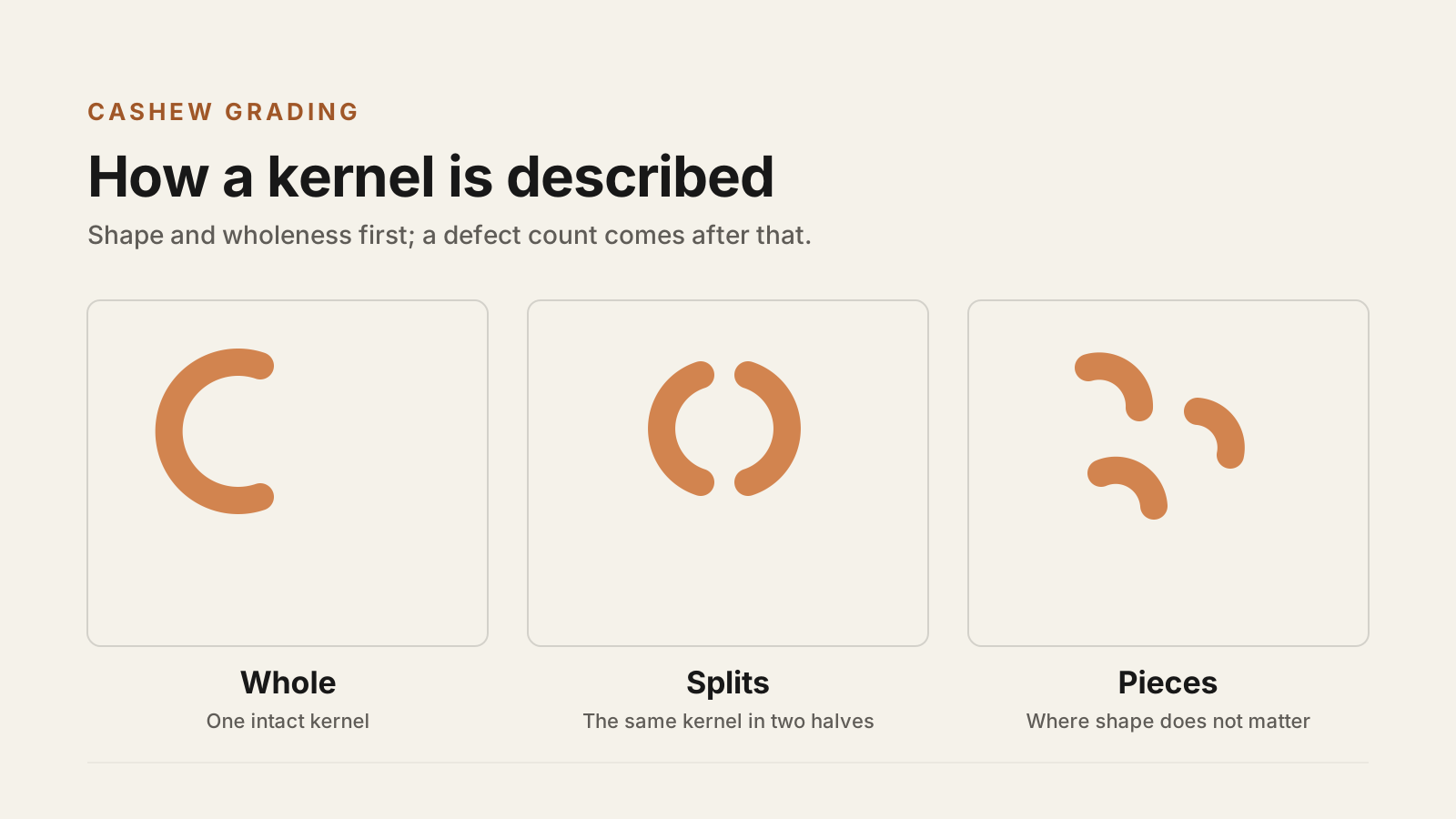
- Shape and integrity: Wholes, splits, pieces, or butts.
- Size (Count): The number of kernels per pound or per kilogram, which dictates the uniformity of the lot.
For industrial buyers, reviewing product specifications before finalizing a contract is critical. You can explore our baseline offering on the Vietnam Cashew Nuts product page.
Understanding white-whole grades
White-whole (WW) kernels represent the highest standard of visual appearance and structural integrity in cashew processing. To qualify as a white-whole grade, kernels must retain their natural, uniform white, light pale, or light ivory color, showing no signs of over-roasting, dark spots, or premature insect damage.
The grading nomenclature for white-wholes is directly tied to the count per pound (lb). Common international designations include:
| Grade Designation | Count per Pound (max) | Count per Kilogram (approx.) | Typical Application |
|---|---|---|---|
| WW 180 | 180 kernels / lb | ~396 kernels / kg | Premium retail snacking, gift packs |
| WW 210 | 210 kernels / lb | ~463 kernels / kg | High-end retail, gourmet mixtures |
| WW 240 | 240 kernels / lb | ~529 kernels / kg | General retail packs, premium baking |
| WW 320 | 320 kernels / lb | ~705 kernels / kg | Industrial baking, food service, general use |
| WW 450 | 450 kernels / lb | ~992 kernels / kg | Confectionery, ingredient manufacturing |
Buyers should note that exact moisture limits, foreign matter tolerances, and defect allowances depend on the specific grade specification confirmed in the quotation. For broader context on sourcing agricultural commodities from the region, read our Vietnam spice export guide.
Physical defect tolerances and quality inspection
Even within white-whole grades, international standards permit minimal tolerances for off-grade or damaged kernels. Inspection protocols typically differentiate between major and minor defects:
- Serious damage: Insect-damaged kernels, rancidity, mold, decay, or adherence of testa (skin) exceeding allowable percentages.
- Scorched or slight discoloration: Kernels that have a slightly darker hue due to processing heat, which are generally categorized separately as Scorched Wholes (S) rather than White Wholes.
- Broken kernels: Pieces or fragments that reduce the count integrity of a whole lot. Standard contracts usually cap the percentage of broken kernels permitted within a white-whole shipment.
To ensure consistency, independent pre-shipment inspection (PSI) reports covering count, moisture content, and defect counts are standard practice in international trade transactions.
Frequently asked questions by international buyers
When evaluating cashew kernel offers, importers frequently raise operational questions regarding compliance and handling:
- What moisture content is acceptable for export? Standard specifications generally mandate a maximum moisture level of 5% to prevent mold growth during transit.
- How are packaging formats determined? Packaging options, such as flexible vacuum pouches inside tin containers or carton boxes flushed with carbon dioxide, depend on the specific preservation requirements and are confirmed upon request.
- Can quality parameters be customized? Specific count requirements or stricter defect thresholds depend on the exact parameters agreed upon during inquiry negotiation.
Conclusion
Understanding cashew kernel grades ensures that importers select the correct product tier for their target market, whether for direct retail distribution or industrial ingredient processing. By aligning purchase specifications with recognized international standards, buyers reduce the risk of quality disputes.
To discuss specific grade availability, documentation requirements, or logistical arrangements for your upcoming import schedule, please reach out directly through our contact page.