
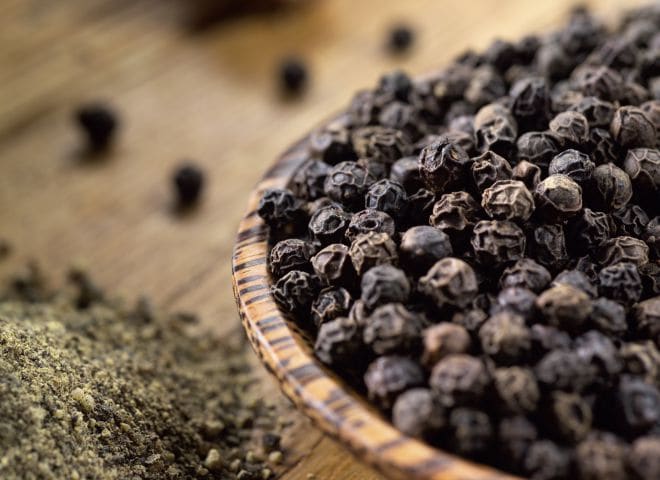
Black Pepper Grades Explained: Density, Moisture and Admixture
What each parameter in a Vietnamese black pepper grade means, how density is measured, and how to read a grade specification before ordering.
A pepper grade specification looks short - “550 G/L, moisture 13% max, admixture 0.5% max” - but each parameter removes a different risk from the buyer’s side. This article explains what each one means, how they interact, and where buyers usually go wrong.
Density (G/L)
Density is the mass of peppercorn in a defined volume, expressed in grams per litre. In practice it is measured by filling a defined container with the cleaned lot and weighing the contents, which is why the test is repeatable and why two lots of the same nominal grade can still differ slightly.
Density is the primary commercial reference for pepper because it moves with the physical characteristics a processor cares about: how clean the lot is, how developed the peppercorn is, and how much light material is mixed in. The published Vietnamese export grades run from 500 G/L up to 620-625 G/L; the full table is on the pepper product page.
Moisture ceiling
Moisture is expressed as a percentage with a maximum. It matters for two reasons:
- Storage and transport. Above the expected range, pepper can develop mould and off-odour risk in a sealed container.
- Buyer yield. Moisture contributes to shipped weight but not to saleable dry matter, so it changes the buyer’s cost per kilo of usable product.
Typical export ceilings sit around 13%, with lower ceilings applying to the cleaner, denser grades. Where a buyer specifies a tighter ceiling, say 12.5% max, that becomes a sourcing constraint rather than a routine parameter, and it is worth confirming feasibility before a contract is signed.
Admixture ceiling
Admixture is the maximum share of other material in the lot - light foreign matter such as stalk, husk and small stones, off-size peppercorn, and pepper of another type. It is usually the parameter with the widest commercial effect, and the one most often left vague in an informal enquiry.
A buyer who does not state an admixture ceiling will be quoted against a default, and the default is not the buyer’s requirement. State the ceiling your process can accept.
How the three interact
The parameters are not independent. A denser, cleaner lot usually carries a tighter admixture ceiling; a looser lot with more light material typically shows a higher admixture figure and may sit at a lower density. This is why a grade is a coherent description of a physical lot rather than three independent numbers.
The practical consequence for buyers: when a lot is rejected at destination, it is usually one of these three parameters, and the fix is a tighter specification up front rather than a general instruction to “send better pepper”.
Reading a quotation
When you receive a pepper quotation, check that it states:
- the grade by density;
- the moisture ceiling;
- the admixture ceiling;
- the processing requirement;
- the packing format;
- the crop year, if the origin is seasonal.
550 G/L vs 570 G/L works through the practical choice between two adjacent grades, and Vietnam black pepper covers origin and export types.
Frequently asked
How is Vietnamese black pepper graded?
Pepper is graded by density, expressed in grams per litre (G/L), together with a moisture ceiling and an admixture ceiling. The grades MKPRO quotes against are 500 G/L, 550 G/L, 570 G/L, 600 G/L and 620-625 G/L. Higher density grades are denser and heavier within the same volume.
What is the difference between FAQ 550 G/L and FAQ 570 G/L pepper?
Both are export grades of Vietnamese black pepper with the same moisture and admixture ceilings, but 570 G/L is denser. A buyer choosing between them is usually choosing between two positions in the same lot: 550 G/L is easier to fill and flows more freely, while 570 G/L gives a higher weight per volume for the same packing format.