
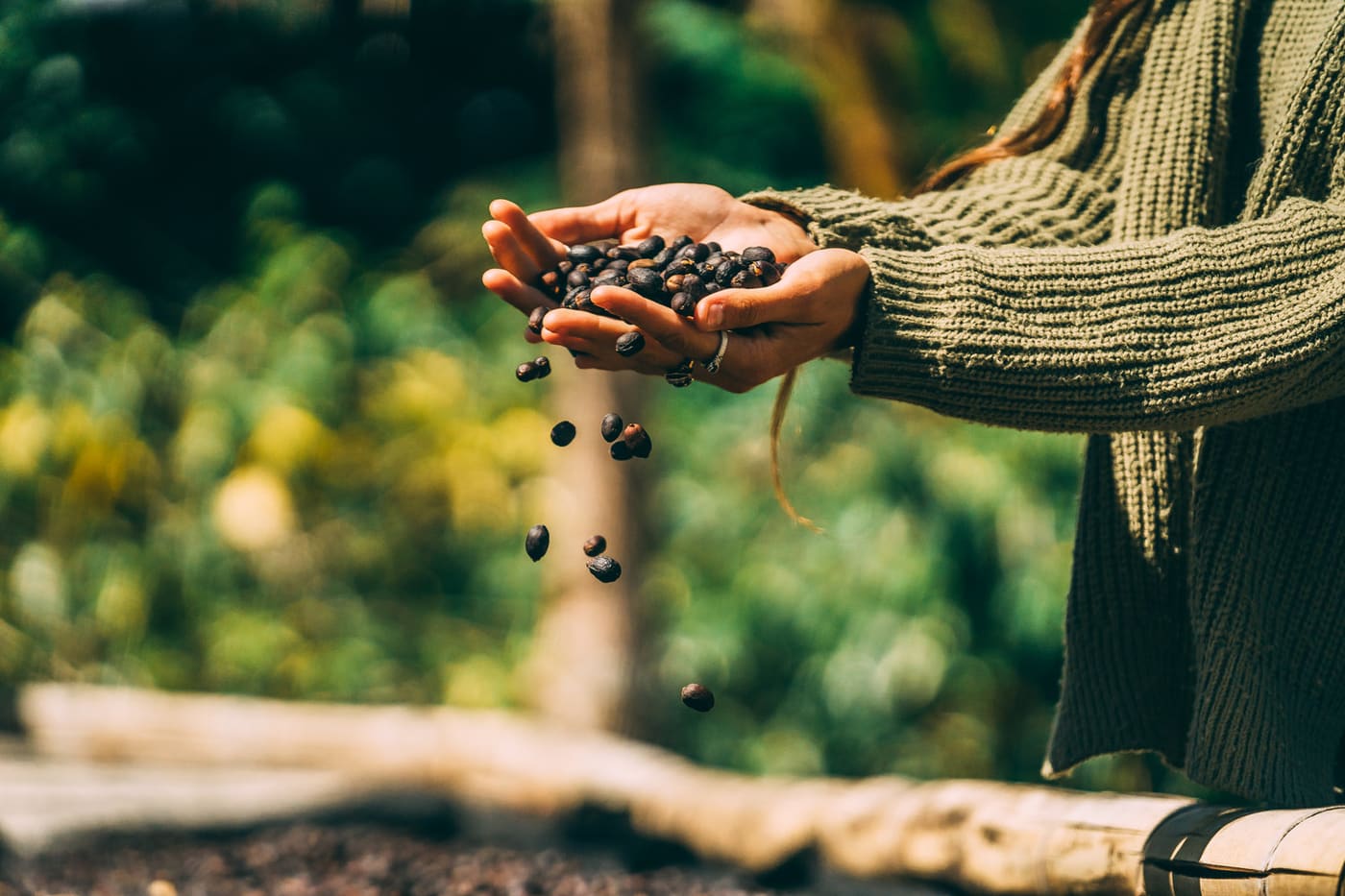
How Vietnamese Pepper Is Processed
How Vietnamese black and white pepper is dried, cleaned, graded, treated and packed - and how each step changes the grade a buyer receives.
The difference between one pepper lot and another is decided at the processing stage, long before anyone looks at a photograph. Understanding the steps explains why density varies between harvests, why admixture is a controllable parameter, and why a processing requirement has to be named at order stage.
Drying
Pepper harvested green or ripe is dried until the moisture content is reduced to a stable level. Drying is the step that creates the risk buyers care about most: if drying is slow or uneven, mould can develop in the fruit, and once that happens the defect does not come out with cleaning. Slow drying also leaves peppercorn that is lighter and less dense.
This is the main reason density varies between lots in the same season, and why a supplier who reports density honestly is describing a real property of the lot rather than a label.
Cleaning
Cleaning removes light foreign matter, stalk, husk and off-size particles. This is what the admixture ceiling measures, and it is why a clean, high-density lot can be supplied against a tight ceiling such as 0.5% maximum.
Cleaning method matters at the margin. A lot cleaned to a recognised cleaning method such as ASTA is processed against a defined impurity framework rather than only against visual appearance. Buyers in regulated markets often specify the cleaning method because it makes the incoming check repeatable.
Treatment
Some destination markets require a specific treatment on imported pepper:
- Steam sterilisation - a heat treatment applied to the product.
- ETO (ethylene oxide) - a fumigation treatment applied to the product.
These are processing requirements, not quality grades, and they should be named in the order specification. They also affect how the product may be used in the destination market, so they are worth confirming with the buyer’s own compliance team rather than assuming.
Grading
Grading separates the cleaned lot into density positions. Material that falls below the selected grade is not simply blended in - it moves to a different grade or a different destination. Grading is the step that turns a physical lot into a tradeable grade such as 550 G/L or 570 G/L, and it is the step recorded at inspection.
Packing
Packing is chosen against the buyer’s requirement: PP/PE bags, paper bags, jumbo bags, or packing produced to the buyer’s specification. Lot identification is applied at packing so the shipment can be traced. Packing format also interacts with the product: a hermetic pack such as GrainPro or vacuum packing is used where the buyer needs stronger moisture protection during a longer route.
White pepper
White pepper is a different preparation, not just a different grade of black. The outer layer is removed - by sun, or by a controlled method - after which the peppercorn is dried again. That second stage changes the density characteristics, which is why white pepper is specified separately rather than offered as a grade of black.
For the numbers behind each grade, see black pepper grades explained. For origin and export types, see Vietnam black pepper.
Frequently asked
How is Vietnamese black pepper graded?
Pepper is graded by density, expressed in grams per litre (G/L), together with a moisture ceiling and an admixture ceiling. The grades MKPRO quotes against are 500 G/L, 550 G/L, 570 G/L, 600 G/L and 620-625 G/L. Higher density grades are denser and heavier within the same volume.
What is the difference between FAQ 550 G/L and FAQ 570 G/L pepper?
Both are export grades of Vietnamese black pepper with the same moisture and admixture ceilings, but 570 G/L is denser. A buyer choosing between them is usually choosing between two positions in the same lot: 550 G/L is easier to fill and flows more freely, while 570 G/L gives a higher weight per volume for the same packing format.